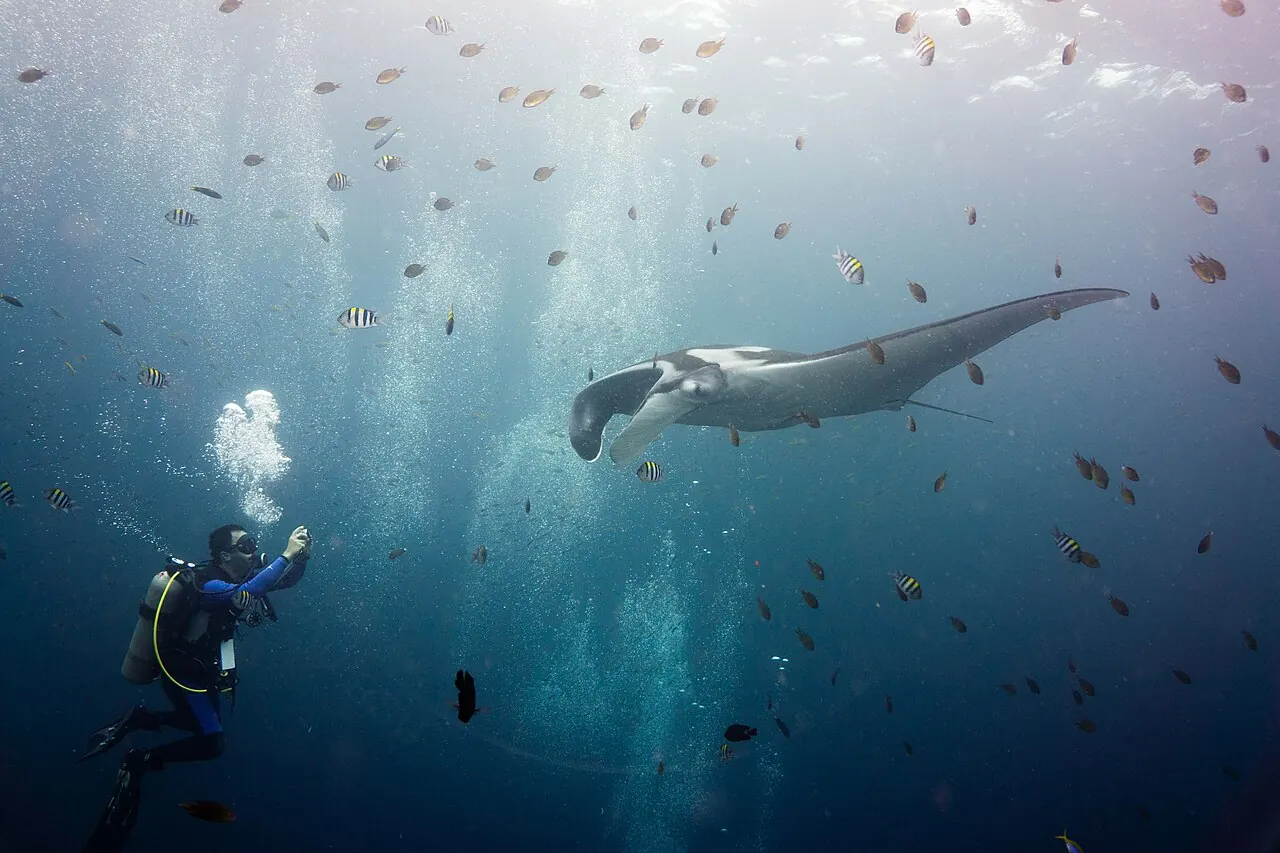
Giant Oceanic Manta Ray
Mobula birostris
The world's largest ray, a plankton-eating giant with a wingspan of up to 8 meters (26 feet) and one of the biggest brains of any fish.
Photo: Daniel Sasse / CC BY-SA 4.0
3 things to know
- The spots on each manta's belly are unique enough to identify individuals.
- A female usually gives birth to a single pup every two to three years.
- A 2011 study found a giant manta's brain heavier than any fish brain measured before.
- Scientific name
- Mobula birostris
- Depth
- 0 m – 450 m
0 – 1,476 ft - Size
- Wingspan up to about 8 m (26 ft)
- Weight
- Up to about 2,400 kg (5,300 lb)
- Lifespan
- Reported to live at least 45 years
- Diet
- Zooplankton such as krill, copepods, mysids, decapod larvae and shrimp; sometimes small fish
- Where
- Tropical, subtropical and temperate seas worldwide
- IUCN status
- Endangered
- Depth zones
- Sunlight · Twilight
With a wingspan of up to 26 feet (about 8 meters), the giant oceanic manta is the largest ray in the world, and NOAA Fisheries puts its weight at up to 5,300 pounds. Two flaps called cephalic lobes extend from the front of its head and help channel water into its wide mouth. Giant mantas come in two color types, black on top and white underneath, or black all over, and the spot pattern on each belly is unique. Compared with the smaller reef manta, the giant manta has rougher skin and a caudal thorn, a small spine on the tail.
Giant mantas live in tropical, subtropical and temperate water around the world, offshore and along productive coasts, island groups, pinnacles and seamounts. They often feed in water less than 10 meters (33 feet) deep, but tagged mantas dive to 200 to 450 meters, and some go past 1,000 meters. In the Gulf of Mexico, NOAA says Flower Garden Banks National Marine Sanctuary and nearby banks may be an important nursery for young giant mantas.
They eat zooplankton: krill, copepods, mysid shrimp, decapod larvae and shrimp, and sometimes small fish. A feeding manta curls its head fins into an O and opens its mouth wide, funneling water over its gill plates, which strain out the food. Some feed by barrel rolling, somersaulting over and over through a patch of plankton.
A female usually gives birth to one pup every two to three years after a pregnancy thought to last about a year. Mantas have been reported to live at least 45 years. That slow breeding makes them easy to overfish. They are targeted and caught as bycatch around the world, partly for their gill plates, which sell in Asian markets. The IUCN lists the giant manta as Endangered, and NOAA listed it as threatened under the Endangered Species Act in 2018.
The manta's brain is unusually large for a fish. In a 2011 study, Csilla Ari of the University of South Florida found that a giant manta's brain outweighed every fish brain measured up to then. She later tested two captive mantas in front of a mirror, with results that other manta researchers have questioned.



