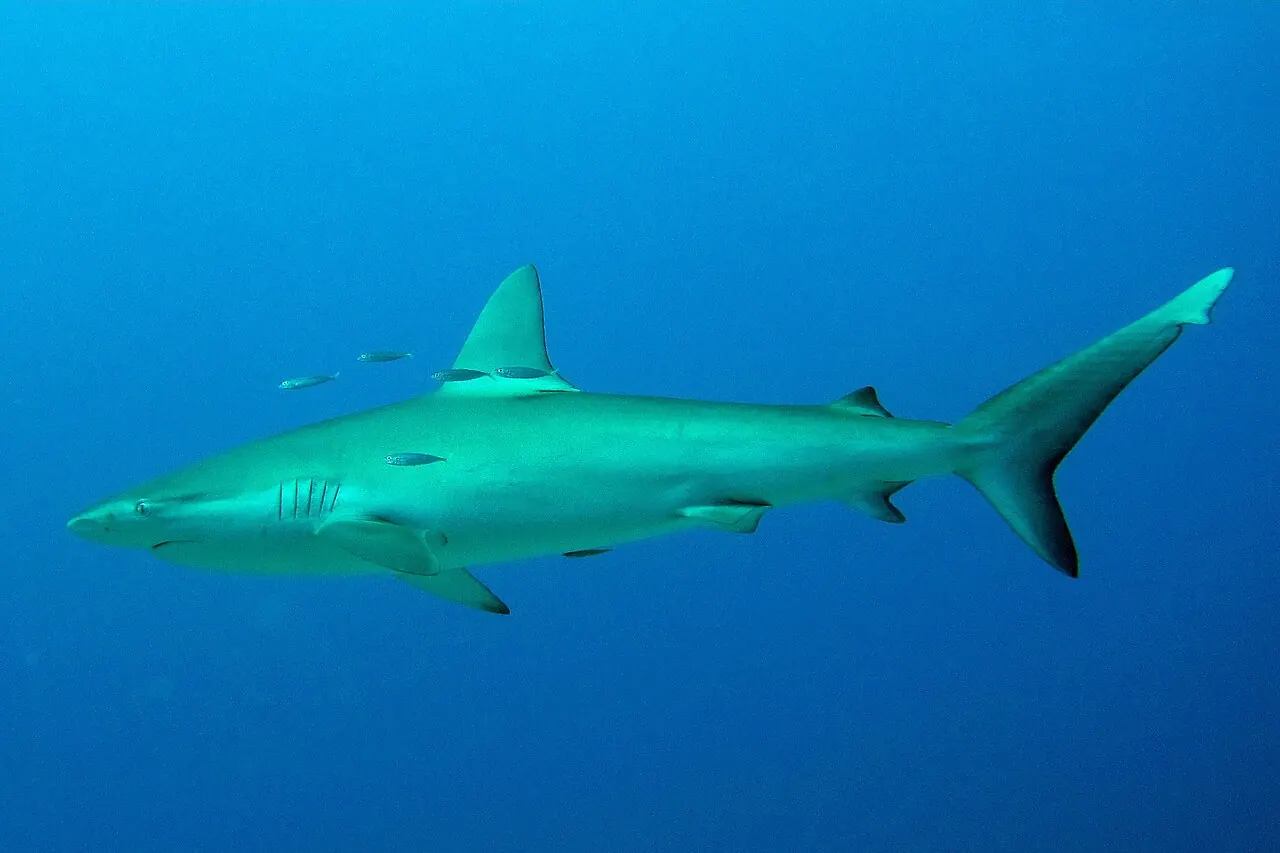
Galapagos Shark
Carcharhinus galapagensis
A large gray reef shark of remote oceanic islands, from the Galapagos to Hawaii, where a few of them hunt monk seal pups.
Photo: Kevin Lino, NOAA/NMFS/PIFSC/ESD (NOAA Photo Library) / CC BY 2.0
3 things to know
- It was named in 1905 from the Galapagos Islands, but it lives around oceanic islands across the tropics.
- At Hawaii's French Frigate Shoals, all shark attacks on monk seal pups seen since 1997 were by Galapagos sharks.
- Young sharks stay in water shallower than 25 m (82 ft), away from cannibal adults.
- Scientific name
- Carcharhinus galapagensis
- Depth
- 30 m – 180 m
98 – 591 ft - Size
- Up to about 3.3 m (11 ft); reported to 3.7 m (12 ft)
- Weight
- Not well known; the heaviest recorded weighed about 195 kg (430 lb)
- Lifespan
- At least 24 years
- Diet
- Mainly bottom fishes, squid and octopus; large sharks also eat rays and other sharks, sea lions, marine iguanas and monk seal pups
- Where
- Tropical waters around oceanic islands worldwide, including the Galapagos, Hawaii, Bermuda and the Virgin Islands
- IUCN status
- Least Concern
- Depth zones
- Sunlight
Galapagos sharks were described in 1905 from the islands that gave them their name, but they turn up around remote oceanic islands throughout the tropics, from St. Helena and Bermuda to Lord Howe Island, Hawaii and Clipperton. They are big gray sharks, brownish-gray above and white below, with a broadly rounded snout, a tall, nearly straight first dorsal fin and a low ridge between the dorsal fins. The Florida Museum gives a maximum length of 3.3 meters (11 feet), and FishBase lists 3.7 meters (12 feet). They look so much like dusky sharks that the surest way to separate the two is to count vertebrae: 103 to 109 in front of the tail in a Galapagos shark, 86 to 97 in a dusky.
They prefer clear water with strong currents over coral or rocky bottoms, usually 30 to 180 meters (100 to 590 feet) deep, and have been recorded to 286 meters. Young sharks stay in water shallower than 25 meters (82 feet), which the Florida Museum says helps them avoid being eaten by adults of their own species. Females give birth to 4 to 16 pups that develop on a yolk-sac placenta.
Galapagos sharks eat mainly bottom fish, squid and octopus, and as they grow they add rays and smaller sharks. Around the Galapagos they hunt sea lions and marine iguanas. In Hawaii their appetite became a conservation problem. At French Frigate Shoals in the Northwestern Hawaiian Islands, sharks are believed to have killed 24 percent of the Hawaiian monk seal pups born there between 1997 and 2010, according to the US Marine Mammal Commission, and every shark attack observed there since 1997 has been by a Galapagos shark. Studies of shark movements found that only about 20 to 30 of the atoll's estimated 600 Galapagos sharks patrolled near the pupping beaches. NOAA Fisheries tried deterrents, which failed, and has moved newly weaned pups to other islets and tried to remove the individual sharks involved.
Around divers they are curious and can be pushy. Before biting, a Galapagos shark may arch its back, raise its head and drop its pectoral fins while twisting and rolling. The International Shark Attack File lists one fatal attack, on a swimmer in the Virgin Islands. Galapagos sharks are on NOAA's list of prohibited sharks in US Atlantic commercial fisheries, and the IUCN's 2018 assessment lists the species as Least Concern.
Sources
- floridamuseum.ufl.edu/discover-fish/species-profiles/carcharhinus-galapagensis
- fishbase.se/summary/Carcharhinus-galapagensis.html
- mmc.gov/priority-topics/species-of-concern/hawaiian-monk-seal/threats-to-hawaiian-monk-…
- fisheries.noaa.gov/atlantic-highly-migratory-species/commercial-atlantic-shark-fishery-…
- galapagosconservation.org.uk/species/galapagos-shark
- iucnredlist.org/species/41736/2954286
- api.gbif.org/v1/species/2417964/iucnRedListCategory



