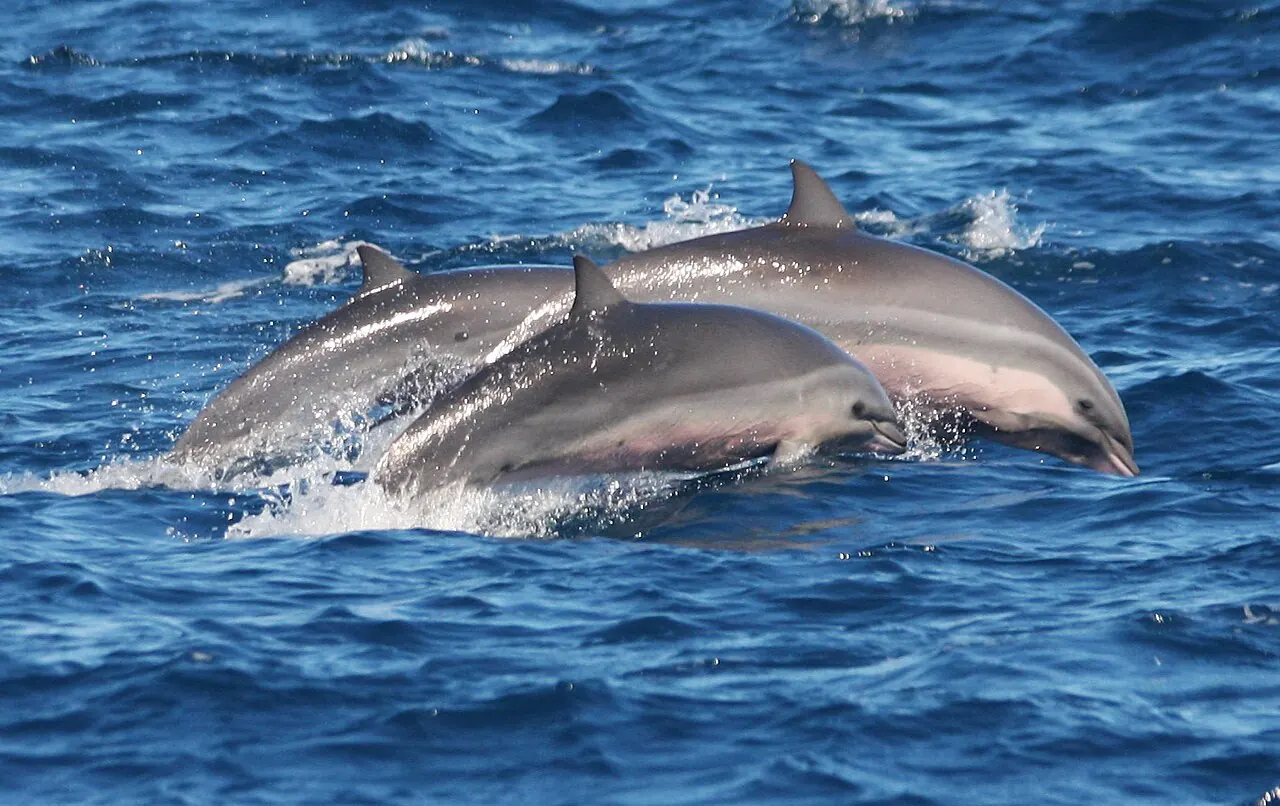
Fraser's Dolphin
Lagenodelphis hosei
A stocky, short-beaked tropical dolphin described from a lone skull in 1956 and not documented alive at sea until 1971.
Photo: Ula0601 / CC BY-SA 4.0
3 things to know
- Scientists knew the species only from a skull until it was documented in the wild in 1971.
- It can dive to about 600 m (2,000 ft) to hunt deep-sea fish, shrimp and squid.
- Groups usually hold 10 to 100 dolphins but sometimes reach 1,000.
- Scientific name
- Lagenodelphis hosei
- Depth
- 0 m – 500 m
0 – 1,640 ft - Size
- About 1.8–2.7 m (6–9 ft) long
- Weight
- About 160–205 kg (350–450 lb)
- Lifespan
- About 18 years or more
- Diet
- Deep-sea fish, shrimp, squid and octopus
- Where
- Deep tropical and subtropical waters worldwide, often where the continental shelf is narrow
- IUCN status
- Least Concern
- Depth zones
- Sunlight · Twilight
Fraser's dolphin entered science as a skull. Francis Fraser of the British Museum described the species in 1956 from a skull found on a beach in Borneo, and its scientific name, hosei, honors Charles Hose, who picked up the skull in Sarawak in 1895 and gave it to the museum. Nobody documented a living Fraser's dolphin at sea until 1971.
The body is stocky, the beak short, and the dorsal fin, flippers and tail flukes are all small. A dark stripe runs along each side from the eye to the flipper, usually thicker and darker in males. The back is bluish or brownish gray and the belly white or pinkish. Adults reach about 1.8 to 2.7 meters (6 to 9 feet) and 160 to 205 kilograms (350 to 450 pounds).
NOAA Fisheries finds Fraser's dolphins in tropical and subtropical seas around the world, usually where the water is about 1,000 meters (3,300 feet) deep, often in areas of upwelling or off mountainous coasts where the continental shelf is narrow. It hunts deep-sea fish, shrimp, squid and octopus, and NOAA says it can dive to about 600 meters (2,000 feet). Bruce Robison and James Craddock, studying prey in the stomachs of three dolphins from the eastern tropical Pacific in 1983, concluded they had fed near 250 and 500 meters (820 and 1,640 feet). They catch prey with 20 to 44 pairs of small, cone-shaped teeth and swallow it whole. Groups are large and tight, usually 10 to 100 animals and occasionally 1,000, sometimes swimming in long "chorus line" rows or mixing with melon-headed whales, false killer whales, Risso's dolphins and short-finned pilot whales.
Fraser's dolphins live about 18 years. Females mature at 5 to 8 years and males at 7 to 10, and a female has a single calf about every two years after a pregnancy of 10 to 12.5 months.
The IUCN Red List rates the species Least Concern (2018), though its population trend is unknown. At least 100,000 to 289,000 live in the eastern tropical Pacific. In US waters, NOAA counts about 10,000 around Hawaii and only about 213 in the northern Gulf of Mexico. Fishing gear such as gillnets and tuna purse seines catches and kills them, including in the eastern tropical Pacific and the Philippines, and they are hunted for meat and oil in Indonesia, Japan, the Lesser Antilles, the Philippines and Sri Lanka.



