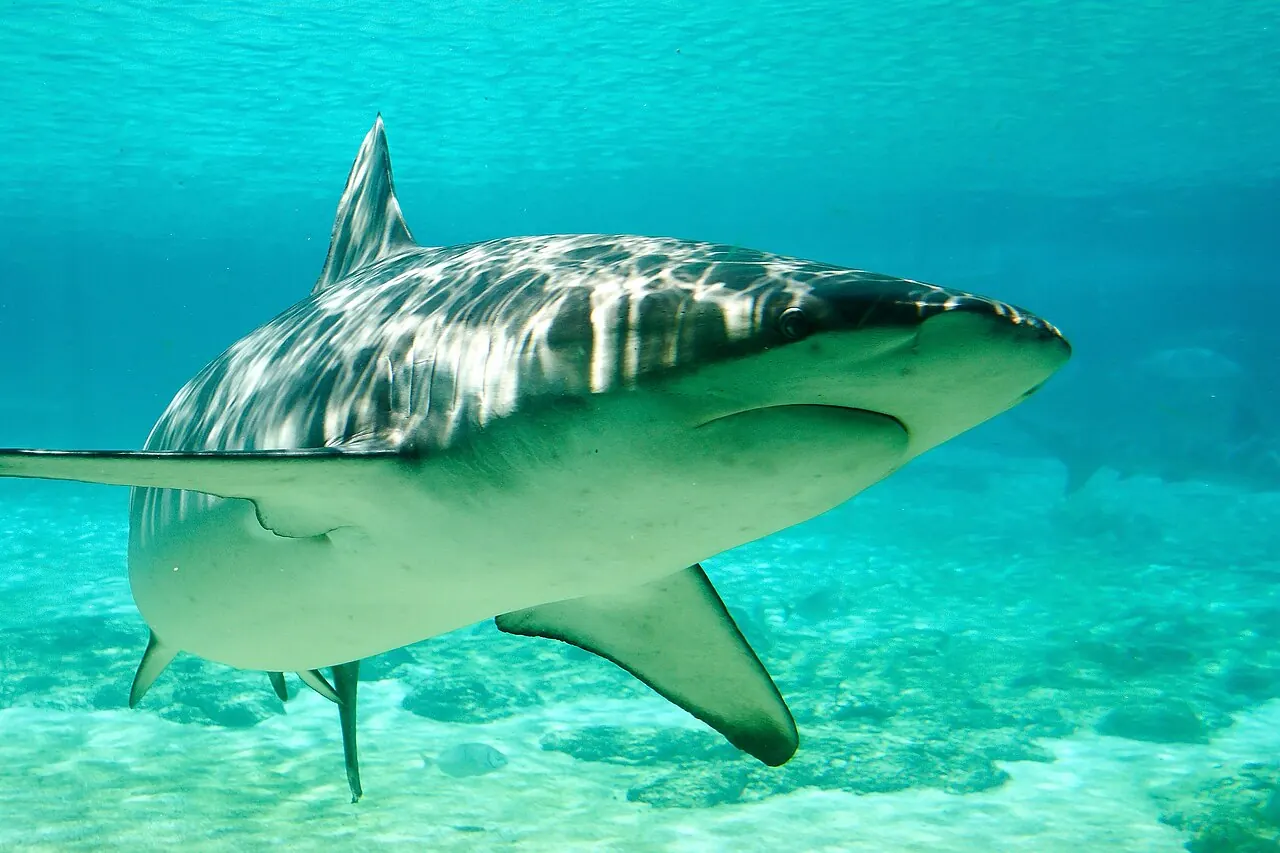
Dusky Shark
Carcharhinus obscurus
A large coastal shark that takes 16 to 23 years to mature, now off-limits to US fishermen while its overfished Atlantic stock rebuilds.
Photo: Steve Garner / CC BY 2.0
3 things to know
- Dusky sharks mature at 16 to 23 years old and breed only every two to three years.
- A raised ridge of skin between the two dorsal fins helps anglers recognize it as a shark they must release.
- Large tagged dusky sharks off Western Australia made round trips of 2,000 to 3,000 km (1,200 to 1,900 mi) between tropical and temperate waters.
- Scientific name
- Carcharhinus obscurus
- Depth
- 0 m – 400 m
0 – 1,312 ft - Size
- Commonly about 2.5 m (8.2 ft); up to about 3.6–4 m (12–13 ft)
- Weight
- Up to about 346 kg (763 lb)
- Lifespan
- At least 40 years (FishBase maximum reported age)
- Diet
- Bony fish, other sharks, skates and rays, squid and other cephalopods, and crustaceans
- Where
- Warm-temperate and tropical continental coasts worldwide; in the US from southern Massachusetts to Florida and the northern Gulf of Mexico, and off southern California
- IUCN status
- Endangered
- Depth zones
- Sunlight · Twilight
Anglers in US Atlantic waters are taught to look for a low ridge of skin running between a shark's two dorsal fins. Most sharks with that interdorsal ridge, the dusky shark among them, are protected and must be released. The dusky itself is big and streamlined, blue-gray to lead-gray above and white below, with a broadly rounded snout, triangular saw-edged upper teeth and long, curved pectoral fins. Adults commonly reach about 2.5 meters (8.2 feet), and the largest about 3.6 to 4 meters (12 to 13 feet) and 346 kilograms (763 pounds).
Duskies live along continental coasts in warm-temperate and tropical seas around the world, from shallow inshore water to the outer shelf and the open water beyond it. Young sharks stay shallower, while adults are common at 200 to 400 meters (660 to 1,310 feet). In US waters they range from southern Massachusetts to Florida and the northern Gulf of Mexico, and off southern California. They eat bony fish, other sharks, skates and rays, squid and crustaceans. Many make long seasonal migrations: in Western Australia, Matias Braccini and colleagues followed large tagged sharks making round trips of 2,000 to 3,000 kilometers (1,200 to 1,900 miles) between tropical and temperate waters.
Everything about their breeding is slow. Dusky sharks mature at 16 to 23 years old, and a pregnancy lasts about 16 to 22 months, depending on the source. Mothers nourish their young through a yolk-sac placenta and give birth to 3 to 16 pups, usually moving inshore to do so, and they breed only every two or three years.
That pace leaves little room for fishing. Dusky shark numbers fell significantly in the Northwest Atlantic, and despite landing bans and rebuilding plans brought in during the 2000s, a 2011 assessment still found the US stock overfished. A 2016 update found the same, and that is still the status in NOAA's 2024–2025 report on Atlantic highly migratory species, published in 2026: overfished, with overfishing occurring, and no newer assessment yet. Duskies are on the US list of prohibited sharks, so they cannot be kept or landed, and NOAA's Amendment 5b aims to end overfishing and rebuild the stock. In Australia, where dusky numbers dropped by more than 75 percent from the 1970s to 2004, the stock is now considered sustainably managed and recovering. Worldwide, the IUCN lists the species as Endangered, in an assessment from 2018.
Sources
- floridamuseum.ufl.edu/discover-fish/species-profiles/dusky-shark
- fishbase.se/summary/Carcharhinus-obscurus.html
- iucnredlist.org/species/3852/2872747
- media.fisheries.noaa.gov/dam-migration/a5b-outreach-plan-2017.pdf
- Study: doi:10.1139/cjfas-2017-0313
- fisheries.noaa.gov/s3/2026-09/safe-report-2024-2025.pdf



