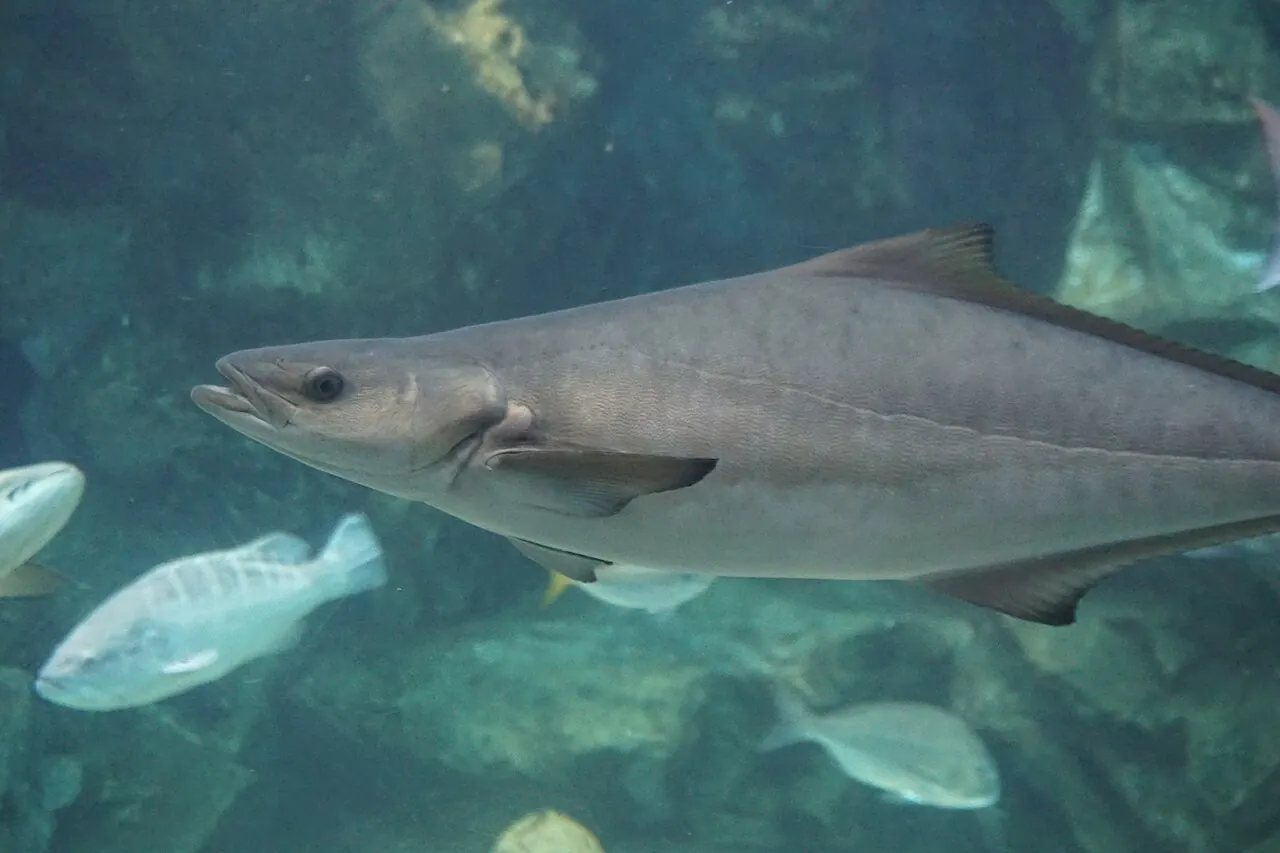
Cobia
Rachycentron canadum
A big, fast-growing game fish that looks like a small shark and often trails sharks, turtles and manta rays.
Photo: タウナギ / CC0
3 things to know
- The cobia's closest living relatives are the remoras.
- A female can release between 375,000 and 2 million eggs each time she spawns.
- In 2024, US recreational anglers landed 3.2 million pounds of cobia.
- Scientific name
- Rachycentron canadum
- Depth
- 0 m – 50 m
0 – 164 ft - Size
- Up to about 2 m (6.6 ft); commonly about 1.1 m (3.6 ft)
- Weight
- Record about 61 kg (135 lb); commonly up to about 23 kg (50 lb)
- Lifespan
- Up to about 12 to 15 years
- Diet
- Mainly crabs and other crustaceans; also fish and squid
- Where
- Tropical and warm temperate seas worldwide except the eastern Pacific; in the western Atlantic from Canada to Argentina, including the Gulf of Mexico and Caribbean
- IUCN status
- Least Concern
- Depth zones
- Sunlight
In profile, a cobia looks a lot like a small shark. It has a long, torpedo-shaped body, a broad flat head with the lower jaw jutting past the upper, a crescent tail and, in front of the soft dorsal fin, a row of 7 to 9 short, sharp spines that are not joined by any membrane. The back is dark brown, with two narrow silvery bands along each side. NOAA Fisheries notes that people often mistake cobia for sharks or for remoras, and that remoras are in fact their closest living relatives. They grow fast and big: up to about 2 meters (6.6 feet), with a record of about 61 kilograms (135 pounds), according to the Florida Museum.
Cobia live in warm seas around the world except the eastern Pacific. In US waters they are most common from Virginia south through the Gulf, over the continental shelf and close to shore. They hang around anything that breaks up open water, such as buoys, wrecks, platforms and floating debris, and around big animals: sharks, sea turtles and rays. They eat mostly crabs and other crustaceans, which earned them the nickname crabeater, along with fish and squid, and they often swallow prey whole.
Off south Florida, freedivers have watched cobia travel with manta rays. Emily Yeager, Jessica Pate and colleagues analyzed nine years (2016 to 2024) of survey data covering 465 encounters with the manta Mobula yarae, and reported in Marine Biology in 2025 that the fish traveling with the mantas fell into four groups: remoras, cobia, scads and other jacks. Remoras were the most common.
Cobia also travel with the seasons. Douglas Jensen and John Graves put pop-up satellite tags on 36 cobia caught off Virginia in 2016 and 2017. The fish stayed in water of at least 20°C (68°F) even in the coldest months, several spent the winter off North Carolina near the edge of the continental shelf, and one swam to Florida. In summer they stayed near the surface; in winter they spent long stretches 20 meters (66 feet) down or deeper.
Females mature at 3 and males at 2, and NOAA says cobia live up to 12 years, though ages of 13 to 15 have been reported elsewhere. NOAA's 2020 assessment found the Gulf stock not overfished but subject to overfishing. The IUCN lists cobia as Least Concern, from an assessment in 2012.



