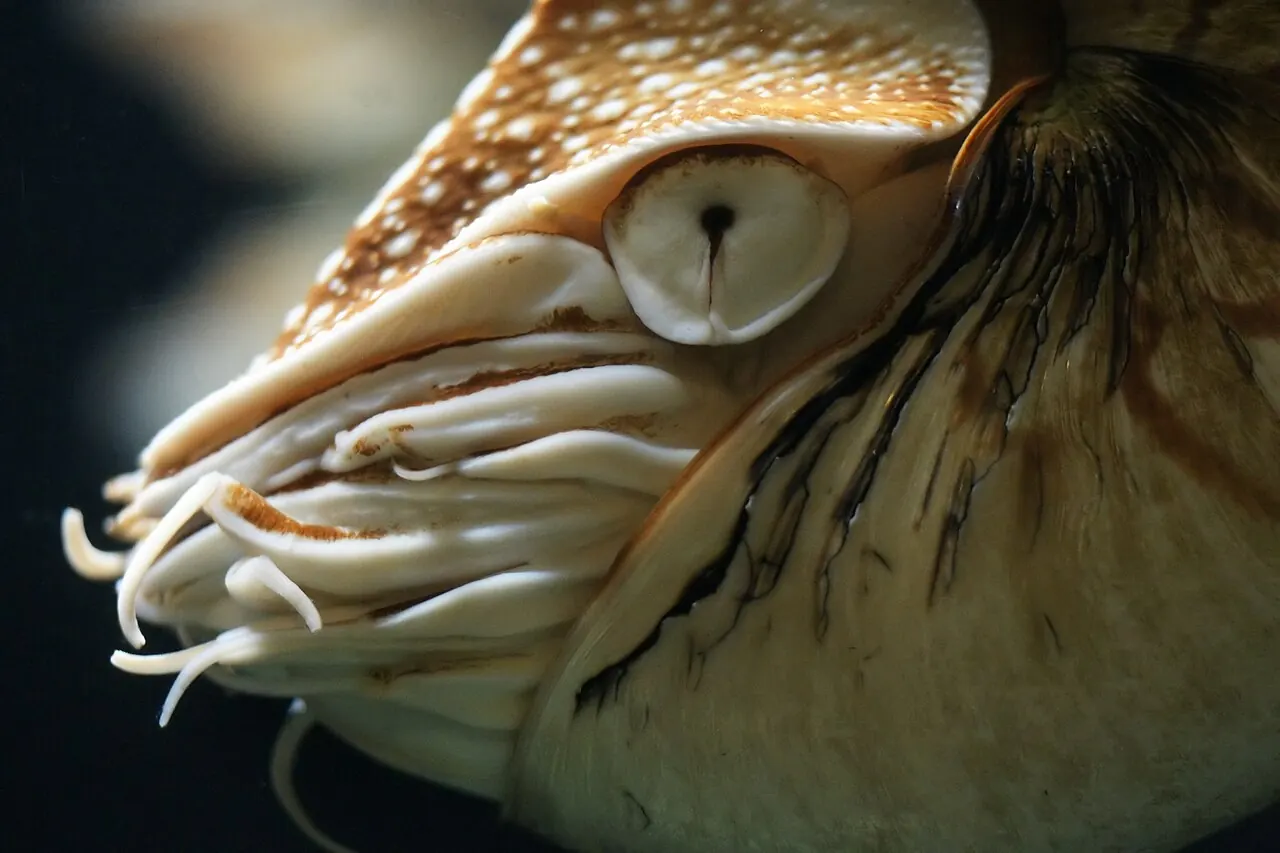
Chambered Nautilus
Nautilus pompilius
A shelled cousin of squid and octopuses that rises and sinks by adjusting fluid in its shell's sealed chambers, on reef slopes of the Indo-Pacific.
Photo: Hans Hillewaert / CC BY-SA 4.0
3 things to know
- Animals similar to it have existed for about 500 million years, according to NOAA.
- Below about 800 meters (2,600 feet), water pressure makes its shell implode.
- It takes 10 to 17 years to reach maturity.
- Scientific name
- Nautilus pompilius
- Depth
- 100 m – 500 m
328 – 1,640 ft - Size
- Shell up to about 22 cm (8.7 in) across
- Weight
- Up to about 1.7 kg (3.7 lb)
- Lifespan
- At least 20 years
- Diet
- Scavenged and live food: fish, crustaceans, sea urchins and other invertebrates
- Where
- Steep reef slopes of the western Pacific and Indian Oceans, from the Andaman Islands to the Philippines, Australia and Fiji
- IUCN status
- Vulnerable
- Depth zones
- Sunlight · Twilight
A coiled, flame-striped shell and a ring of around 90 tentacles without suckers set the chambered nautilus, Nautilus pompilius, apart from its relatives, the squid, octopuses and cuttlefish. The soft-bodied animal lives in the newest and largest chamber at the front of the shell. When attacked, it pulls back inside and closes the opening with a large, fleshy hood. The shell grows to about 22 centimeters (8.7 inches) across.
It lives on steep reef slopes in the western Pacific and Indian Oceans, from the Andaman Islands to the Philippines, Australia and Fiji, mostly between about 100 and 500 meters (330 and 1,640 feet) deep. It cannot tolerate water much warmer than about 25°C (77°F), and below about 800 meters (2,600 feet) the pressure makes the shell implode. NOAA Fisheries calls it an extreme habitat specialist.
Behind the living chamber, older chambers are sealed off and linked by a strand of tissue called the siphuncle. By moving fluid into or out of them, the nautilus changes its buoyancy to rise or sink, and it swims by jet propulsion. It feeds as a scavenger and opportunistic predator, digging in the sediment with its tentacles for fish, crustaceans, sea urchins and other invertebrates. Its sense of smell can pick up prey in turbulent water from up to 10 meters (33 feet) away.
A chambered nautilus takes 10 to 17 years to mature and lives at least 20 years. Based on captive animals of related species, a female may lay only 10 to 20 eggs a year, and each takes about a year to hatch. That makes it easy to overfish. The shells are sold as souvenirs and used in jewelry and home decor, and between 2005 and 2014 the United States imported more than 900,000 chambered nautilus products. In 2016 all nautilus species were placed under international trade controls through CITES, and in 2018 NOAA Fisheries listed this one as threatened under the Endangered Species Act. The IUCN Red List assessment published in 2026 lists it as Vulnerable.
Sources
- fisheries.noaa.gov/species/chambered-nautilus
- oceanservice.noaa.gov/facts/nautilus.html
- govinfo.gov/content/pkg/FR-2017-10-23/pdf/2017-22771.pdf
- govinfo.gov/content/pkg/FR-2018-09-28/html/2018-21114.htm
- sealifebase.se/summary/Nautilus-pompilius.html
- en.wikipedia.org/wiki/Chambered_nautilus
- Study: doi:10.2305/IUCN.UK.2026-1.RLTS.T162636A933767.en
- gbif.org/species/331812506



