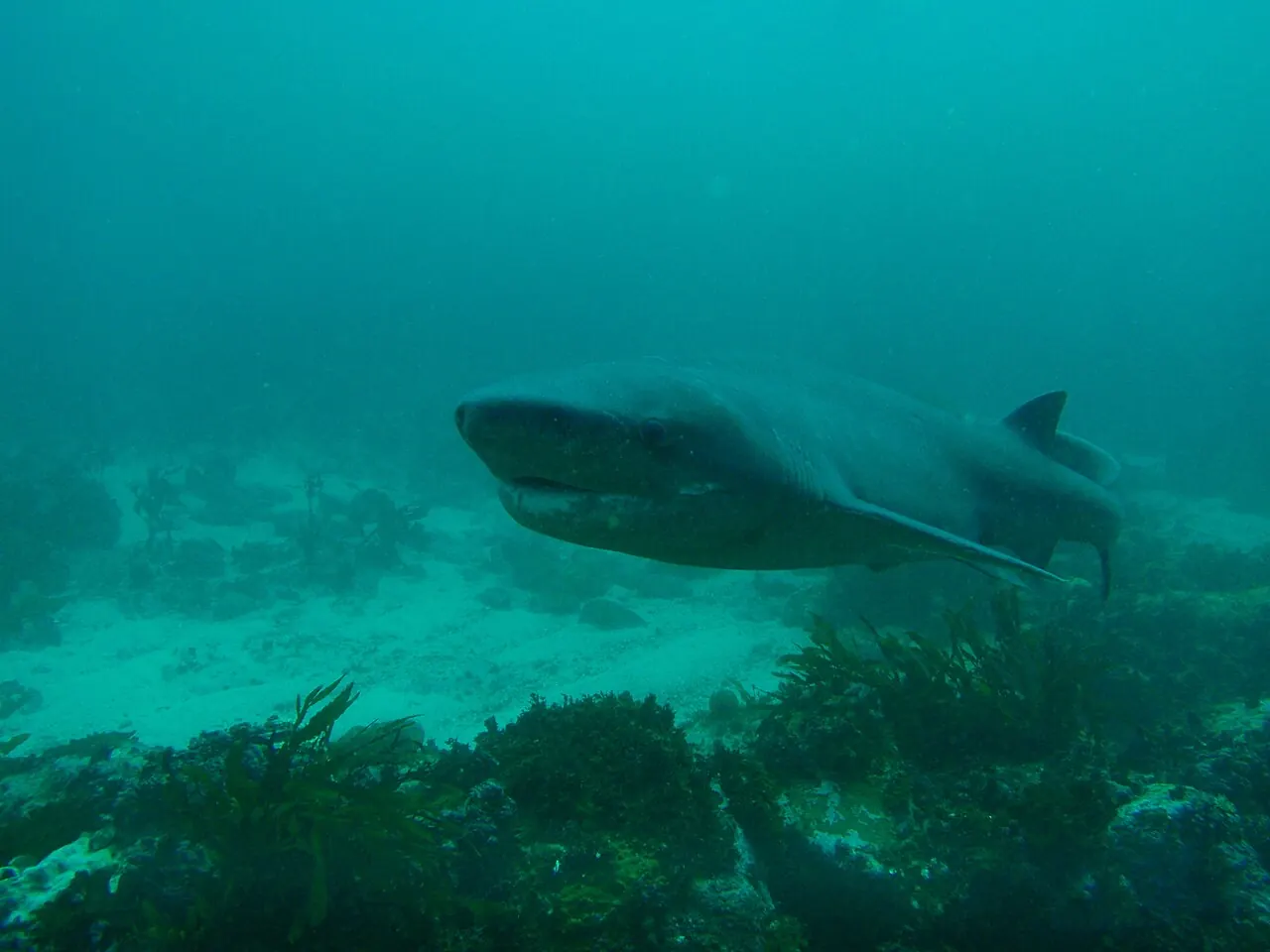
Broadnose Sevengill Shark
Notorynchus cepedianus
A spotted, blunt-nosed cowshark with seven gill slits instead of five, which eats almost anything, from fish to seals and other sharks.
Photo: Peter Southwood / CC BY-SA 3.0
3 things to know
- It has seven gill slits on each side, where most sharks have five.
- A female can give birth to as many as 82 pups at once.
- In False Bay, South Africa, killer whales have been documented killing sevengills and eating only their livers.
- Scientific name
- Notorynchus cepedianus
- Depth
- 0 m – 80 m
0 – 262 ft - Size
- Commonly about 1.5 m (4.9 ft) long; up to about 3 m (9.8 ft)
- Weight
- Up to about 107 kg (236 lb)
- Lifespan
- About 50 years; the oldest reported was 49
- Diet
- Almost anything: other sharks, rays, chimaeras, bony fishes, seals, dolphins, porpoises and carrion
- Where
- Tropical to temperate coasts of every ocean except the North Atlantic and the Mediterranean; in the eastern Pacific from British Columbia to Chile, including California
- IUCN status
- Vulnerable
- Depth zones
- Sunlight
Count the gill slits and you know this shark: most sharks have five on each side, and the broadnose sevengill has seven. It also has a wide head, a short, blunt snout and a single small dorsal fin set far back on the body. The back is silver-gray to brown and speckled with small black and white spots, and the belly is pale. Its lower jaw is lined with wide, comb-shaped teeth for cutting, while the upper teeth are sharp and jagged for gripping. Adults are commonly about 1.5 meters (5 feet) long and can reach 3 meters (almost 10 feet).
Sevengills live along tropical to temperate coasts in every ocean except the North Atlantic and the Mediterranean. In the eastern Pacific they range from British Columbia to Chile, and the Florida Museum reports that California's sevengills appear to be concentrated in Humboldt and San Francisco bays, which serve as nurseries for the young. Small sharks stay in shallow bays and estuaries. Larger ones move into deep channels and offshore water, usually no deeper than about 80 meters (260 feet), though the species has been recorded at 570 meters (1,870 feet).
A sevengill will eat other sharks, rays, chimaeras, bony fish such as salmon and herring, seals, dolphins, porpoises and carrion. It usually cruises slowly near the bottom but can dash at prey, and sevengills sometimes hunt in groups to bring down large animals.
Females give birth in shallow bays after a pregnancy of about 12 months, apparently every other year, to as many as 82 pups that are 40 to 45 centimeters (16 to 18 inches) long. The oldest sevengill on record was 49 years old.
California once had a commercial fishery for sevengills in the 1930s and 1940s, and it soon collapsed. Today most are caught by anglers or as bycatch. The IUCN's 2020 assessment lists the species as Vulnerable, with a decreasing population.
Sevengills gather in False Bay, South Africa, and killer whales have been seen there more often since 2009. In 2015 and 2016 Tamlyn Engelbrecht, Alison Kock and Justin O'Riain documented orcas killing sevengills and eating only the livers. The whales applied force to each shark's pectoral fins until its pectoral girdle ruptured, opening a way to the liver. After those attacks, the sharks abandoned what the authors call the largest known aggregation site for the species for up to a month.



