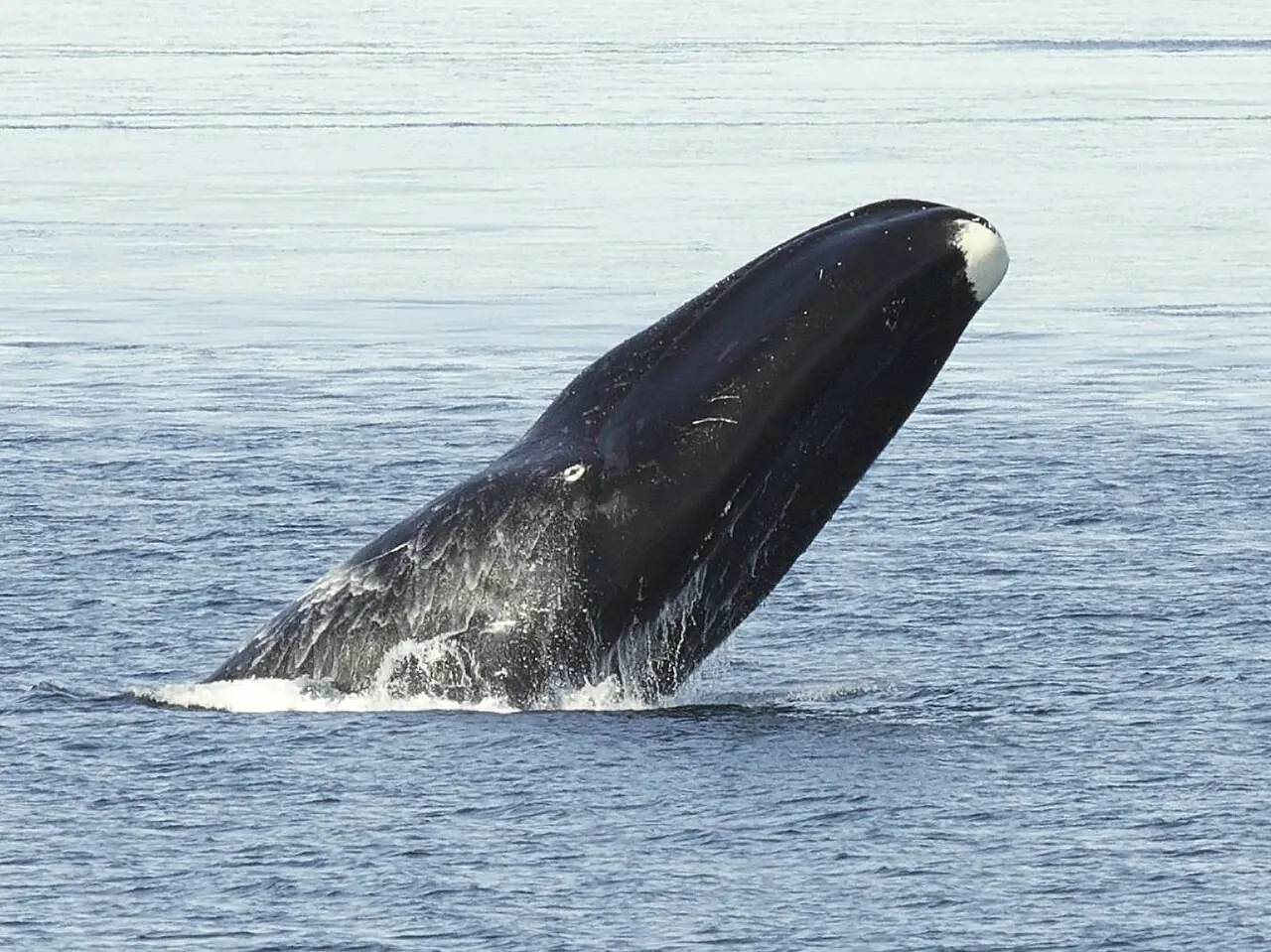
Bowhead Whale
Balaena mysticetus
An Arctic whale with the thickest blubber of any whale, a head that breaks sea ice, and a lifespan that may pass 200 years.
Photo: Bering Land Bridge National Preserve / CC BY-SA 2.0
3 things to know
- Its skull can be over 5 meters (16.5 feet) long, about a third of its body.
- It can break through sea ice 20 centimeters (8 inches) thick.
- Its cells make far more of the DNA-repair protein CIRBP than other mammals' cells do.
- Scientific name
- Balaena mysticetus
- Depth
- 0 m – 416 m
0 – 1,365 ft - Size
- Up to about 19 m (62 ft) long
- Weight
- Up to about 90 metric tons (200,000 lb)
- Lifespan
- Over 100 years for some animals; studies suggest more than 200 years
- Diet
- Krill, copepods and other small invertebrates, plus some small fish
- Where
- Arctic and subarctic waters with seasonal sea ice, mainly between 60° and 75° north
- IUCN status
- Least Concern
- Depth zones
- Sunlight · Twilight
Bowheads live almost entirely in Arctic and subarctic waters that freeze over part of the year, mostly between 60° and 75° north, and follow the ice edge north as it breaks up each spring. The body is dark with a white chin and no dorsal fin, and the arched skull can be more than 5 meters (16.5 feet) long, about a third of the whale. That thick skull lets a bowhead break through sea ice 20 centimeters (8 inches) thick, and some Alaska Native whalers have reported whales surfacing through ice 60 centimeters (2 feet) thick. Under the skin is a layer of blubber 43 to 48 centimeters (17 to 19 inches) thick, more than any other whale carries.
Adults reach about 19 meters (62 feet) and 90 metric tons (200,000 pounds). They have the longest baleen of any whale and strain krill, copepods and other small invertebrates from the water, an estimated 100 metric tons of prey a year. One of five bowheads tagged in Disko Bay, West Greenland, in 2001 dove to 416 meters (1,365 feet), the deepest dive the study recorded.
Commercial whalers hunted bowheads off Alaska from the early 1800s, drawn by their oil and baleen and by how slowly they swam and how readily they floated when killed. By the 1920s fewer than 3,000 were left worldwide. The Western Arctic population, the one in US waters, has recovered to about 15,000 and is now the largest. The IUCN lists the species as Least Concern, but the US still lists all bowheads as endangered, and the Okhotsk Sea population numbers only a few hundred.
Stone harpoon tips found in harvested whales show that some bowheads live well over 100 years. In 1999 John C. George and colleagues estimated ages from chemical changes in the eye lens and found four males older than 100. In 2025 a University of Rochester team led by Vera Gorbunova and Andrei Seluanov reported in Nature that bowhead cells make far more of a DNA-repair protein called CIRBP than other mammals' cells do; Gorbunova described the level as 100-fold higher. Adding the whale's version of the protein improved DNA repair in human cells and extended the lives of fruit flies.
Sources
- fisheries.noaa.gov/species/bowhead-whale
- sealifebase.se/summary/Balaena-mysticetus.html
- Study: doi:10.1139/z99-015
- Study: doi:10.1038/s41586-025-09694-5
- rochester.edu/newscenter/cirbp-protein-mammalian-longevity-bowhead-whales-674682
- journalhosting.ucalgary.ca/index.php/arctic/article/download/63658/47594
- en.wikipedia.org/wiki/Bowhead_whale
- iucnredlist.org/species/2467/50347659



