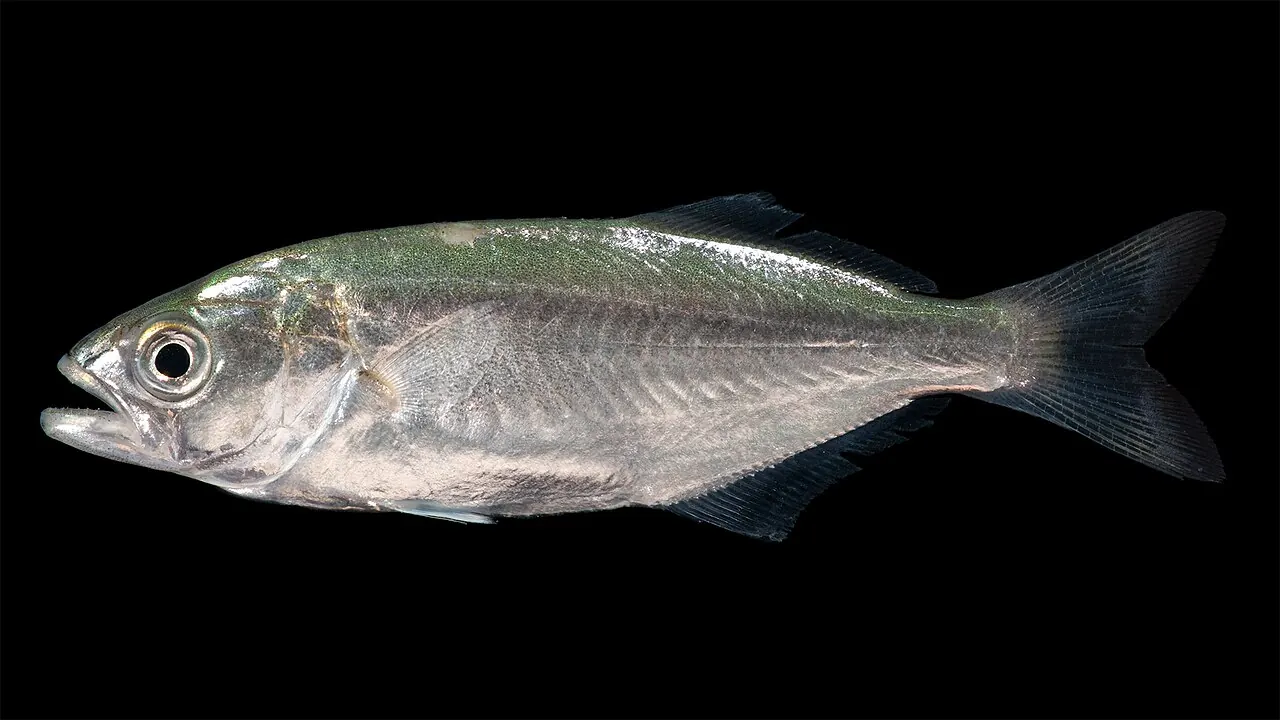
Bluefish
Pomatomus saltatrix
A sharp-toothed schooling predator of the US East Coast whose feeding frenzies churn the sea, and whose teeth get bigger with every replacement.
Photo: Smithsonian Environmental Research Center / CC BY 2.0
3 things to know
- Bluefish replace their teeth in waves that pass from the back of the jaw to the front.
- Bluefish schools can cover tens of square miles of ocean.
- Bluefish are a major part of the diet of shortfin mako sharks.
- Scientific name
- Pomatomus saltatrix
- Depth
- 0 m – 200 m
0 – 656 ft - Size
- Up to about 1 m (39 in), per NOAA; FishBase lists 130 cm (4.3 ft)
- Weight
- Up to about 14 kg (31 lb)
- Lifespan
- Up to 12 years, per NOAA; FishBase lists a maximum reported age of 14
- Diet
- Fish, especially menhaden and silversides, plus squid and crustaceans
- Where
- Temperate and tropical coastal waters worldwide except the eastern Pacific; in the US from Maine to Florida
- IUCN status
- Vulnerable
- Depth zones
- Sunlight
Look into a bluefish's mouth and you see a single row of sharp, flattened teeth along jaws that jut forward. Each tooth sits in a deep socket, fused to the bone. When William Bemis, Anne Giuliano and Betty McGuire examined the jaws of 50 bluefish for a 2005 study, they found that new teeth grow inside the bone beneath the old ones and replace them at every other position, in long waves running from the back of the jaw to the front. Each new tooth is bigger than the one before it, and the number of teeth rises as the fish grows. The rest of the fish is plainer: blue-green on the back, silvery on the sides and belly.
Bluefish live in temperate and tropical coastal seas around the world, except the eastern Pacific. They are most common along surf beaches and rocky headlands in clean, rough water, but adults also enter estuaries, and the IUCN gives a depth range down to 200 meters (660 feet). Along the US East Coast they range from Maine to Florida, moving north in spring and summer as the water warms and south to the South Atlantic Bight in autumn and winter. NOAA says they gather by size in schools that can cover tens of square miles.
They eat squid and fish, especially menhaden and silversides. In a "bluefish blitz," big schools attack bait near the surface and churn the water. FishBase notes that adults attacking schools of mullet can kill far more fish than they seem to need. Adults in turn are eaten by sharks, tunas and billfish, and NOAA says bluefish are a major part of the shortfin mako's diet.
Bluefish grow fast. They can spawn at age 2, at 38 to 51 centimeters (15 to 20 inches), and spawn several times in spring and summer. A female carries 400,000 to 2 million eggs, released in the open ocean. The larvae grow near the surface over the continental shelf before young fish move into estuaries and shallow coastal water. NOAA gives a maximum age of 12 years.
The IUCN lists the species as Vulnerable worldwide. The US Atlantic stock is on a rebuilding plan with a target date of 2029, and NOAA's 2025 assessment found it not overfished and not subject to overfishing, though still rebuilding. Most of the US catch is taken by recreational anglers.



