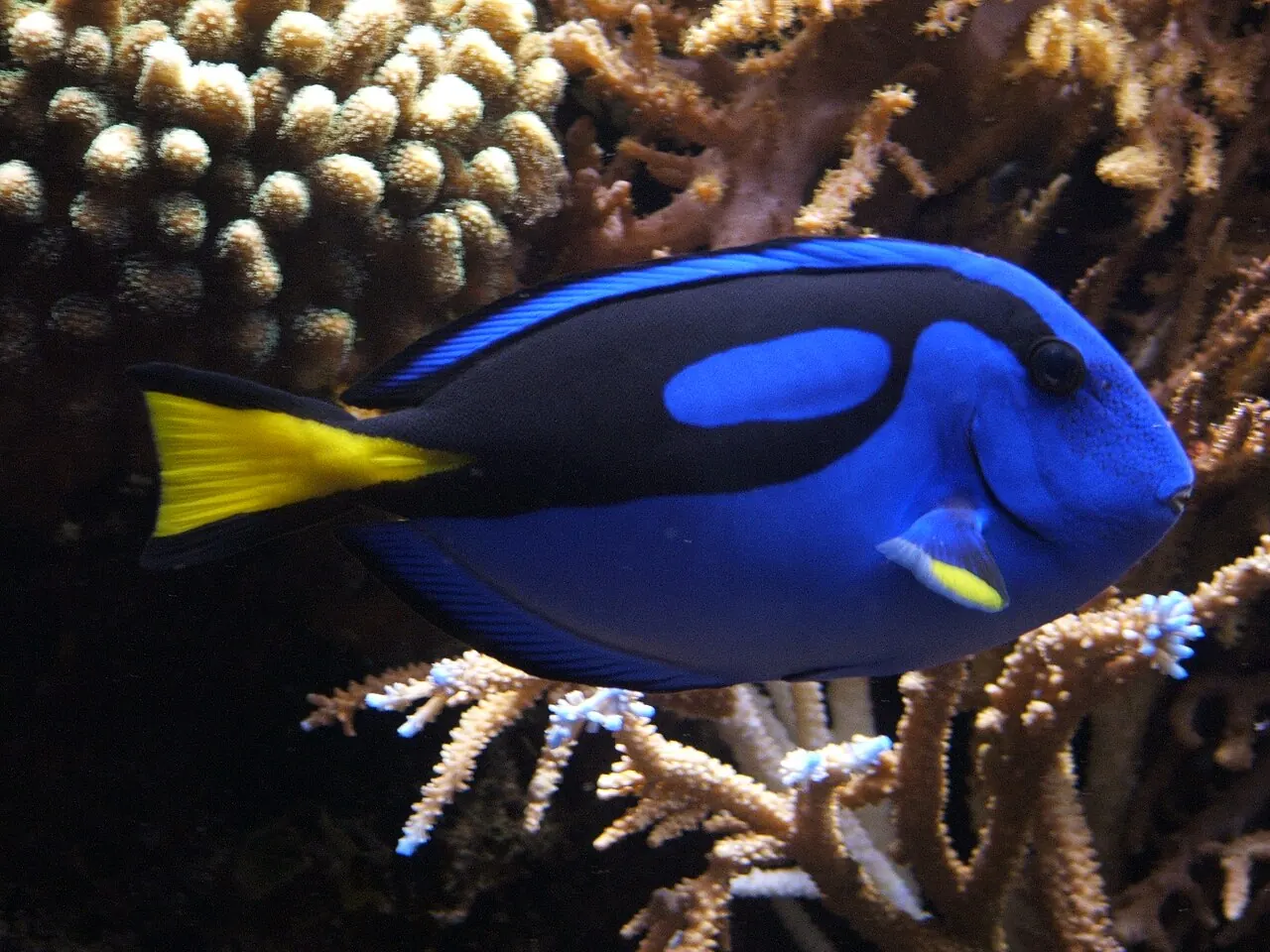
Blue Tang
Paracanthurus hepatus
The Indo-Pacific surgeonfish that played Dory: a plankton eater of current-swept reefs, first raised in captivity in Florida in 2016.
Photo: Tewy / CC BY 2.5
3 things to know
- Its official common name in FishBase is palette surgeonfish.
- Young blue tangs hide deep among the branches of a coral head when alarmed.
- The first captive-bred blue tangs were raised in a greenhouse in Ruskin, Florida, in 2016.
- Scientific name
- Paracanthurus hepatus
- Depth
- 2 m – 40 m
7 – 131 ft - Size
- Up to about 31 cm (12 in) long
- Weight
- Not well known
- Lifespan
- Not well known
- Diet
- Mostly zooplankton, and occasionally algae
- Where
- Indo-Pacific reefs from East Africa to Kiribati and Samoa, north to southern Japan and south to the southern Great Barrier Reef
- IUCN status
- Least Concern
- Depth zones
- Sunlight
Royal blue with a black marking shaped like a painter's palette and a bright yellow tail, the blue tang is the reef fish that played Dory in Disney's Finding Dory. FishBase lists it under the name palette surgeonfish. It grows to about 31 centimeters (12 inches) and lives on Indo-Pacific reefs from East Africa to Kiribati and Samoa, north to southern Japan and south to the southern Great Barrier Reef. Florida divers use the same name for a different fish, the Atlantic blue tang (Acanthurus coeruleus), which ranges from New York and Bermuda to Brazil.
The Pacific blue tang favors clear, current-swept terraces on the seaward side of reefs, usually 10 to 40 meters (33 to 130 feet) down. They hang in loose groups a meter or two above the bottom and feed mostly on zooplankton, with the occasional mouthful of algae. Juveniles and young adults gather around isolated heads of Pocillopora eydouxi coral, and when something frightens them they wedge themselves tightly among its branches. FishBase describes the species as relatively uncommon and highly localized, and lists it as venomous.
It is also a hardy, very popular aquarium fish. When National Geographic reported on the trade in 2016, every blue tang in an aquarium had come from a reef, and more than 130,000 had reached US markets in 2009 alone, according to a trade database. Indonesia is the largest source country. Some collectors stun reef fish with cyanide, which damages or kills the surrounding coral.
In May 2016, weeks before the film opened, the University of Florida's Tropical Aquaculture Laboratory started a run that produced the first blue tangs ever raised in captivity. On day 52 of the run, the team photographed a young fish with 26 siblings in a greenhouse in Ruskin, Florida. Before that, lab director Craig Watson said, their best result had been a single fish that lived 21 days. The project, begun about six years earlier, was a partnership with Rising Tide Conservation and the SeaWorld-Busch Gardens Conservation Fund.
The IUCN lists the blue tang as Least Concern, from an assessment made in 2010.
Sources
- fishbase.se/summary/Paracanthurus-hepatus.html
- fishbase.se/summary/Acanthurus-coeruleus.html
- blogs.ifas.ufl.edu/news/2016/07/20/finding-dory-ufifas-researchers-find-first-ever-meth…
- nationalgeographic.com/animals/article/wildlife-blue-tang-aquarium-trade
- commons.wikimedia.org/wiki/File:Blue_tang_(Paracanthurus_hepatus)_02.jpg



