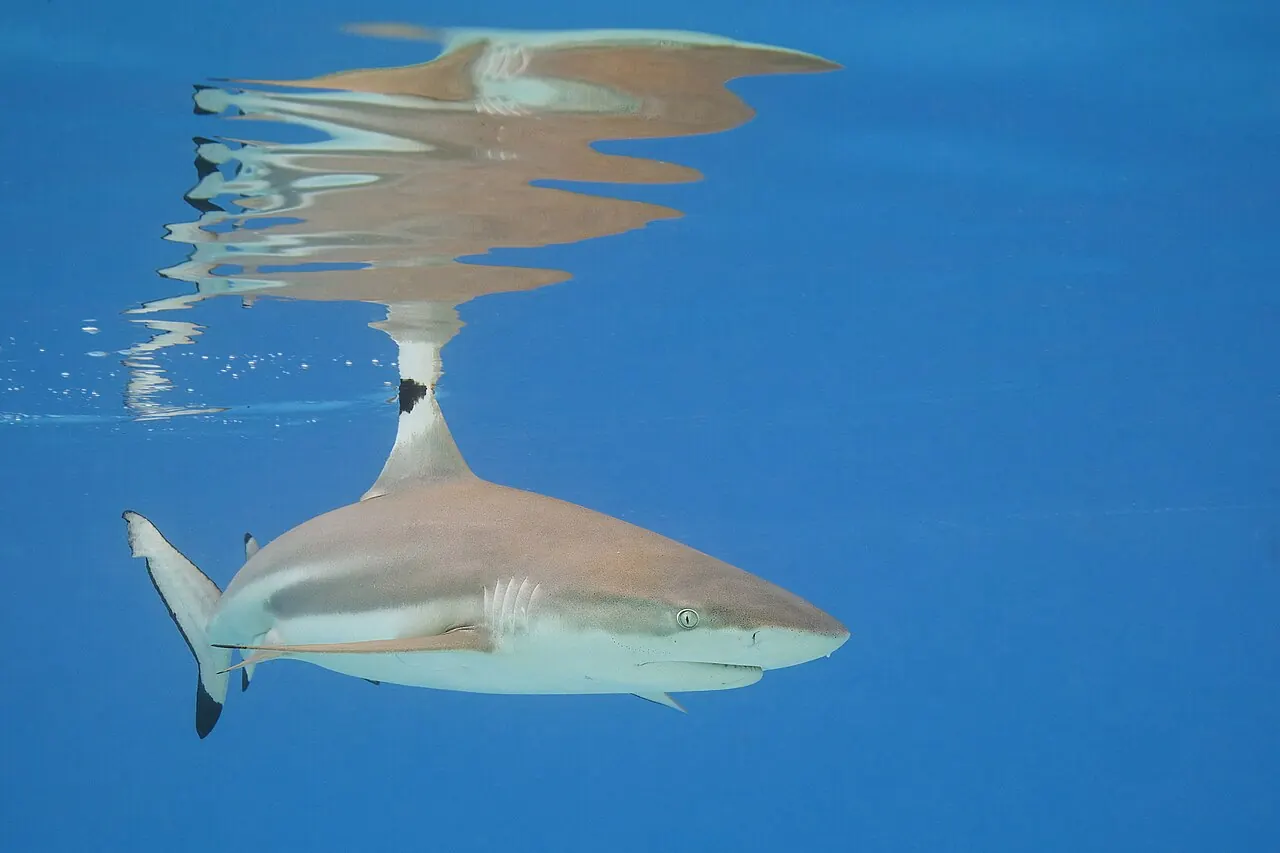
Blacktip Reef Shark
Carcharhinus melanopterus
A small Indo-Pacific reef shark with black-tipped fins that hunts on shallow reef flats, in lagoons and among mangroves.
Photo: Charles J. Sharp / CC BY-SA 4.0
3 things to know
- Every fin is tipped in black, and the black tip of the first dorsal fin is set off by a pale band below it.
- Around Moorea, DNA tests showed some females travel to another island 50 km (31 miles) away to give birth.
- Most litters contain 2 to 4 pups.
- Scientific name
- Carcharhinus melanopterus
- Depth
- 0 m – 75 m
0 – 246 ft - Size
- Usually under about 1.6 m (5.2 ft); recorded to about 1.8 m (5.9 ft)
- Weight
- Up to about 13.6 kg (30 lb), the heaviest reported to the IGFA
- Lifespan
- Not well known
- Diet
- Mostly fishes; also crustaceans, cephalopods and other molluscs; sea snakes and land snakes have been reported
- Where
- Tropical Indo-Pacific, from the Red Sea and East Africa to Hawaii and the Tuamotu Archipelago, north to Japan and south to northern Australia
- IUCN status
- Vulnerable
- Depth zones
- Sunlight
Black-dipped fins make this one of the easiest reef sharks to name. Every fin ends in a black tip, and on the first dorsal fin the black is set off by a pale band just below it. The body is yellow-brown to tan above and white below, with a short, rounded snout. Most adults stay under about 1.6 meters (5.2 feet), though the Florida Museum notes individuals recorded to about 1.8 meters (5.9 feet).
It lives across the tropical Indo-Pacific, from the Red Sea and East Africa east to Hawaii and the Tuamotu Archipelago. FishBase gives a depth range of 0 to 75 meters (246 feet), but this is mostly a shallow-water shark. It hunts on coral reefs, reef flats and drop-offs, moves in and out of mangroves with the tide, and sometimes enters fresh water near the sea. It eats mostly fishes, plus crustaceans, cephalopods and other molluscs, and it has been reported eating both sea snakes and land snakes.
Females give birth to live pups nourished through a yolk-sac placenta. Most litters hold 2 to 4 pups, and pregnancy lasts anywhere from about 8 to 16 months depending on the region. Blacktips keep to small home ranges: one study cited by the Florida Museum found that individuals spent about 70 percent of their time over a year within an area of roughly 0.3 square kilometers.
That homebody habit bends when it is time to give birth. Johann Mourier and Serge Planes used DNA to match young blacktips with their mothers around Moorea, in French Polynesia. Most females gave birth at their home island, but some swam to particular nursery areas elsewhere, sometimes on another island 50 kilometers (31 miles) away across deep ocean, and each returned to the same nursery every time she gave birth. Many of the pups were inbred, which the authors read as a sign of a small population, restricted movement or a particular mating pattern.
The Florida Museum's International Shark Attack File lists 11 unprovoked bites on people since 1959. Inshore fisheries take blacktips for their fins, meat and liver oil, and the IUCN's 2020 assessment lists the species as Vulnerable.



