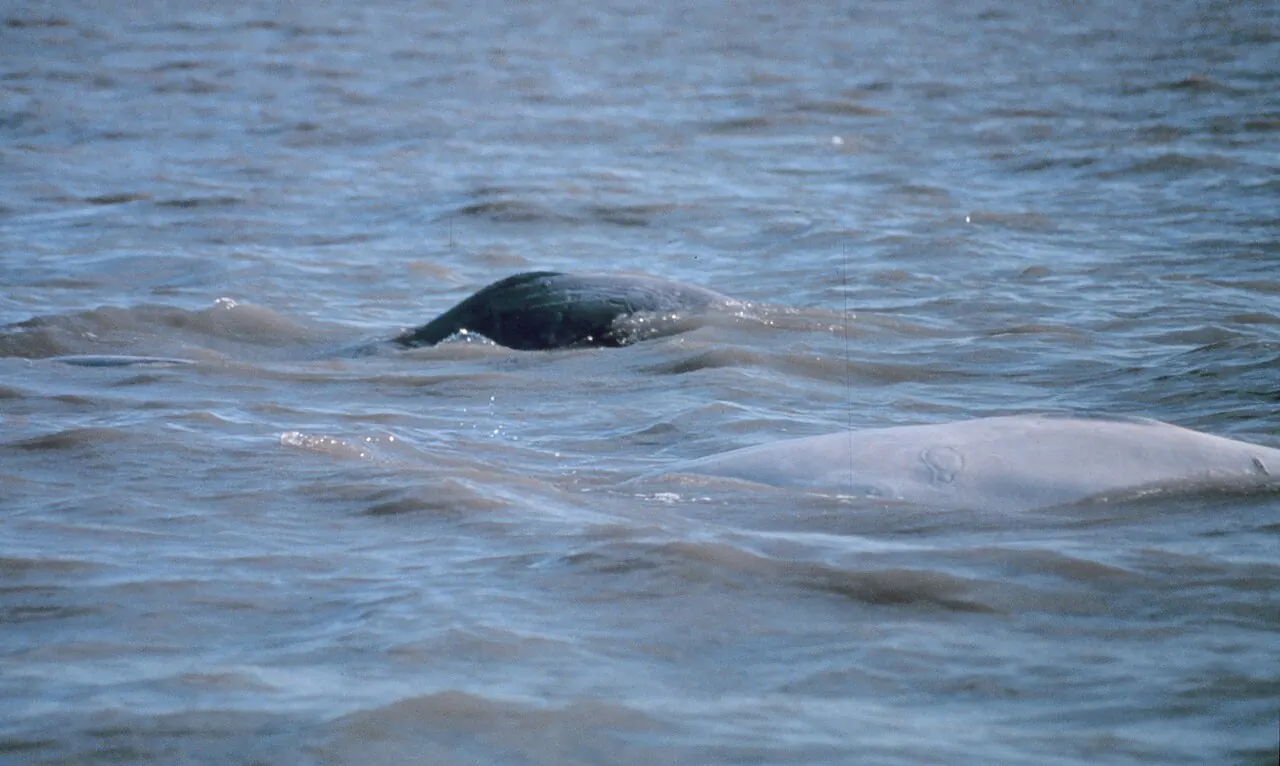
Beluga
Delphinapterus leucas
A white Arctic whale with a flexible neck and a huge range of calls, nicknamed the canary of the sea.
Photo: Janice Waite, NOAA / Public domain
3 things to know
- Belugas are born dark gray and turn white as they mature.
- Unlike most whales and dolphins, it can nod and turn its head.
- Alaska's Cook Inlet population fell from about 1,300 in 1979 to an estimated 279 in 2018.
- Scientific name
- Delphinapterus leucas
- Depth
- 0 m – 956 m
0 – 3,137 ft - Size
- Up to about 4.9 m (16 ft) long
- Weight
- Average about 1,430 kg (3,150 lb)
- Lifespan
- Up to about 80–90 years
- Diet
- Fish such as salmon, eulachon, cod and herring, plus octopus, squid, crabs, shrimp, clams and worms
- Where
- Arctic and subarctic seas of the Northern Hemisphere, including Alaska, Canada, Greenland and Russia
- IUCN status
- Least Concern
- Depth zones
- Sunlight · Twilight
Belugas are born dark gray and lighten with age until, as adults, they are white. A beluga has no beak and no dorsal fin, only a tough ridge along the back that lets it slide under floating ice. On top of its head sits a soft, rounded melon that shapes its echolocation clicks. Its neck bones are not fused, so unlike most whales and dolphins it can nod and turn its head. Adults reach about 4.9 meters (16 feet) and average 1,430 kilograms (3,150 pounds), up to 40 percent of it blubber.
Whistles, squeals, moos and chirps earned belugas the nickname canary of the sea. They live in the Arctic Ocean and nearby seas, around Alaska, Canada, Greenland and Russia. In summer they gather in shallow bays, estuaries and river mouths to feed on runs of salmon and eulachon, and some populations molt then too, rubbing on coarse gravel to scrape off old yellowed skin. In other seasons they move to deeper water and can dive to 1,000 meters (3,300 feet) for up to 25 minutes. Besides fish they eat octopus, squid, crabs, shrimp, clams and worms.
Like tree rings, beluga teeth add a growth layer each year. The oldest beluga on record had 80 layers, and wear on the tooth means it may have been older. Females mature at 6 to 14 years, carry a calf for about 15 months and nurse it for at least two years. In northwest Alaska pregnancy rates start to decline after about age 46, and NOAA counts belugas among the mammals known to go through menopause, along with humans and killer whales. Yet the oldest known female there, aged 70, was carrying a near-term fetus.
Worldwide, belugas may number in the hundreds of thousands, and the IUCN lists the species as Least Concern. One US population is in serious trouble. Cook Inlet belugas, which live beside Anchorage, the most densely populated part of Alaska, fell from about 1,300 in 1979 to an estimated 279 in 2018 and are listed as endangered under the Endangered Species Act. Alaska Native hunters have not been allowed to harvest them since 2008. The latest estimate is 331, which NOAA says suggests the population may be stabilizing, though more years of surveys are needed to confirm it. Noise from ships, construction and pile driving, contaminants and strandings on the inlet's mudflats are among the threats.



