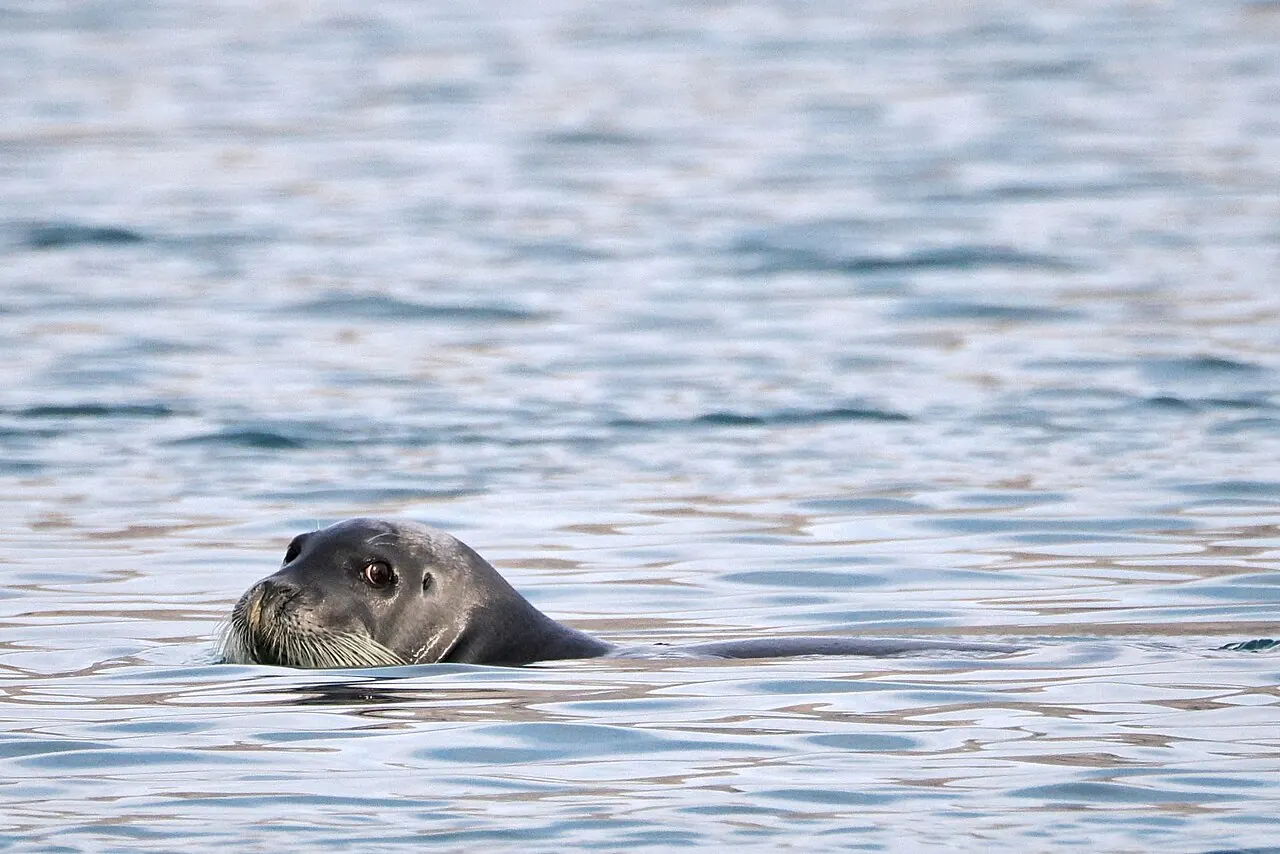
Bearded Seal
Erignathus barbatus
The largest Arctic seal, named for its long white whiskers, which feeds on the seafloor and whose males sing trills heard up to 19 km away.
Photo: stevestevens (iNaturalist) / CC0
3 things to know
- Some male trills carry up to 19 km (12 miles) and last as long as three minutes.
- Within a week of birth, pups can dive to about 60 m (200 ft).
- In an assessment published in 2025, the IUCN moved it from Least Concern to Near Threatened.
- Scientific name
- Erignathus barbatus
- Depth
- 0 m – 200 m
0 – 656 ft - Size
- About 2.1–2.4 m (7–8 ft) long
- Weight
- About 260–360 kg (575–800 lb)
- Lifespan
- About 25 years
- Diet
- Shrimp, crabs, clams, whelks and bottom fish such as cod and sculpins
- Where
- Shallow, seasonally ice-covered Arctic and sub-Arctic seas, south to Hokkaido and Newfoundland; in the US, off Alaska
- IUCN status
- Near Threatened
- Depth zones
- Sunlight
In the breeding season, male bearded seals sing. Their songs, made of trills, moans and groans, advertise that a male is ready to breed or claim a patch of water, and each male's song is his own. Some trills can be heard up to 19 kilometers (12 miles) away and last as long as three minutes, according to NOAA Fisheries, and Alaska Native hunters follow the sound to find the seals.
The bearded seal is the largest Arctic seal, about 2.1 to 2.4 meters (7 to 8 feet) long and 260 to 360 kilograms (575 to 800 pounds), with females slightly larger than males in some regions. It is named for its thick, long white whiskers, which are very sensitive and help it find food on the bottom. The coat is plain gray to brown and the front flippers small and square, and some seals have rust-colored faces from digging in seafloor mud. Their teeth wear down fast; seals older than nine rarely have teeth showing above the gums.
Bearded seals live around the Arctic in shallow seas that freeze at least part of the year, mostly where the bottom is less than 200 meters (650 feet) down, because that is where they feed: shrimp, crabs, clams, whelks, cod and sculpins, many taken by suction. They rest alone on the edges of ice floes, heads toward the water for a quick escape from predators, and have been seen sleeping upright in open water. Pups are born on the ice between mid-March and May, spend half their time in the water within a few days, and can dive to about 60 meters (200 feet) within a week. Nursing lasts about 24 days, and adults live about 25 years.
NOAA estimates more than 500,000 worldwide, though the IUCN says the total is probably in the low hundreds of thousands. In an assessment published in 2025, the IUCN moved the species from Least Concern to Near Threatened, citing a loss of more than half of its sea-ice habitat, declining breeding calls recorded around Svalbard where Atlantic water has replaced Arctic water, and high death rates in recent unexplained die-offs in the Pacific Arctic. In the United States, the Beringia population off Alaska is listed as threatened under the Endangered Species Act.



