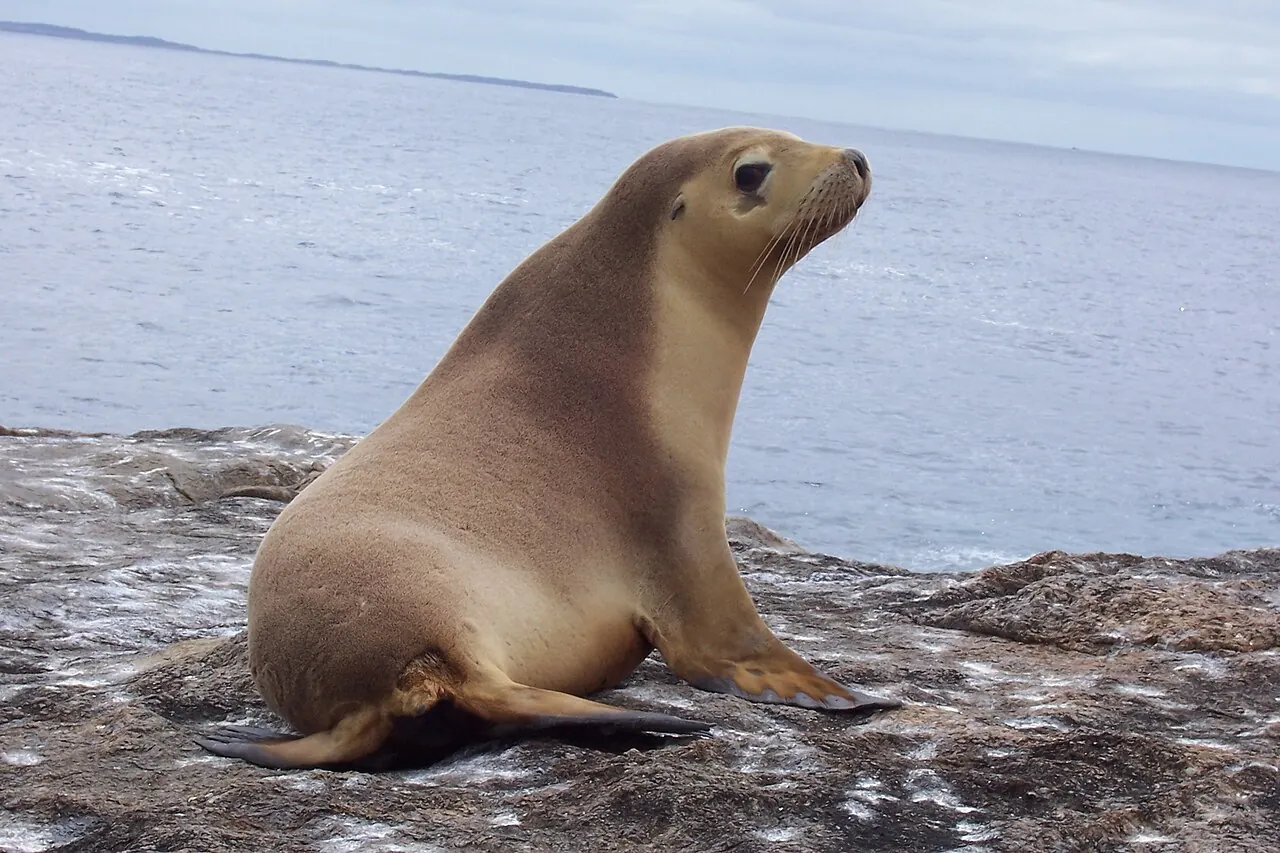
Australian Sea Lion
Neophoca cinerea
Australia's only native sea lion, which breeds on a cycle of about 18 months unlike any other seal and has declined by more than 60 percent in 40 years.
Photo: Brian M Hunt / CC BY-SA 3.0
3 things to know
- Females give birth about every 17 to 18 months, and colonies breed at different times.
- Females usually breed in the same colony where they were born.
- It is the only marine mammal among Australia's 110 priority species for 2022 to 2032.
- Scientific name
- Neophoca cinerea
- Depth
- 0 m – 100 m
0 – 328 ft - Size
- Males about 2 m (6.5 ft); females about 1.75 m (5.7 ft)
- Weight
- Males around 220 kg (485 lb); females about 100 kg (220 lb)
- Lifespan
- Oldest recorded: females 26 years, males 21.5
- Diet
- Seafloor fish, octopus, cuttlefish, squid, rock lobster and sometimes little penguins
- Where
- Southern and western Australia, from the Houtman Abrolhos islands in Western Australia to The Pages islands in South Australia
- IUCN status
- Endangered
- Depth zones
- Sunlight
Most seals and sea lions breed once a year. The Australian sea lion has a birth interval of about 17 to 18 months, and the timing differs from colony to colony. Australia's 2013 national recovery plan calls it the only seal or sea lion whose breeding cycle is both longer than a year and out of step across its range. Females also tend to breed in the colony where they were born, so each colony largely stands on its own.
Males are dark brown with a pale yellowish mane over the head and neck, and grow to about 2 meters (6.5 feet) and 220 kilograms (485 pounds). Females are silver-gray to fawn above and cream below, about 1.75 meters (5.7 feet) and 100 kilograms (220 pounds). Pups are born chocolate brown.
The species lives only in Australia, from the Houtman Abrolhos islands in Western Australia to The Pages islands in South Australia. Most breeding colonies sit on offshore islands, with a few at the foot of mainland cliffs, and the recovery plan counted 58 of them. The sea lions stay on the continental shelf and hunt on the seabed, most often in water 20 to 100 meters (65 to 330 feet) deep, taking fish, octopus, giant cuttlefish, squid, southern rock lobster and sometimes little penguins. On Kangaroo Island, the beach at Seal Bay has become a popular place to watch them.
Numbers are small and falling. The recovery plan's best estimate for 2011 was about 14,700 animals. South Australia's 2023 environmental report card says the species has declined by more than 60 percent nationally over the last 40 years, and by almost 70 percent in South Australia, which holds more than 80 percent of the population. Bycatch in fisheries, above all gillnets, entanglement in marine debris, disease, pollution and climate change are the main threats. The IUCN Red List rates the species Endangered, and Australia moved it from Vulnerable to Endangered under its national EPBC Act in December 2020. The Australian government's Threatened Species Action Plan 2022–2032 names it the only marine mammal among its 110 priority species.
Sources
- legislation.gov.au/F2013L01314/asmade/2013-07-04/text/original/epub/OEBPS/document_2/do…
- environment.gov.au/biodiversity/threatened/species/pubs/22-conservation-advice-23122020…
- soe.epa.sa.gov.au/files/documents/Case-studies_DEW_File_Biodiversity_Australian-Sea-Lio…
- australian.museum/learn/animals/mammals/australian-sea-lion
- en.wikipedia.org/wiki/Australian_sea_lion
- Study: doi:10.2305/IUCN.UK.2015-2.RLTS.T14549A45228341.en



