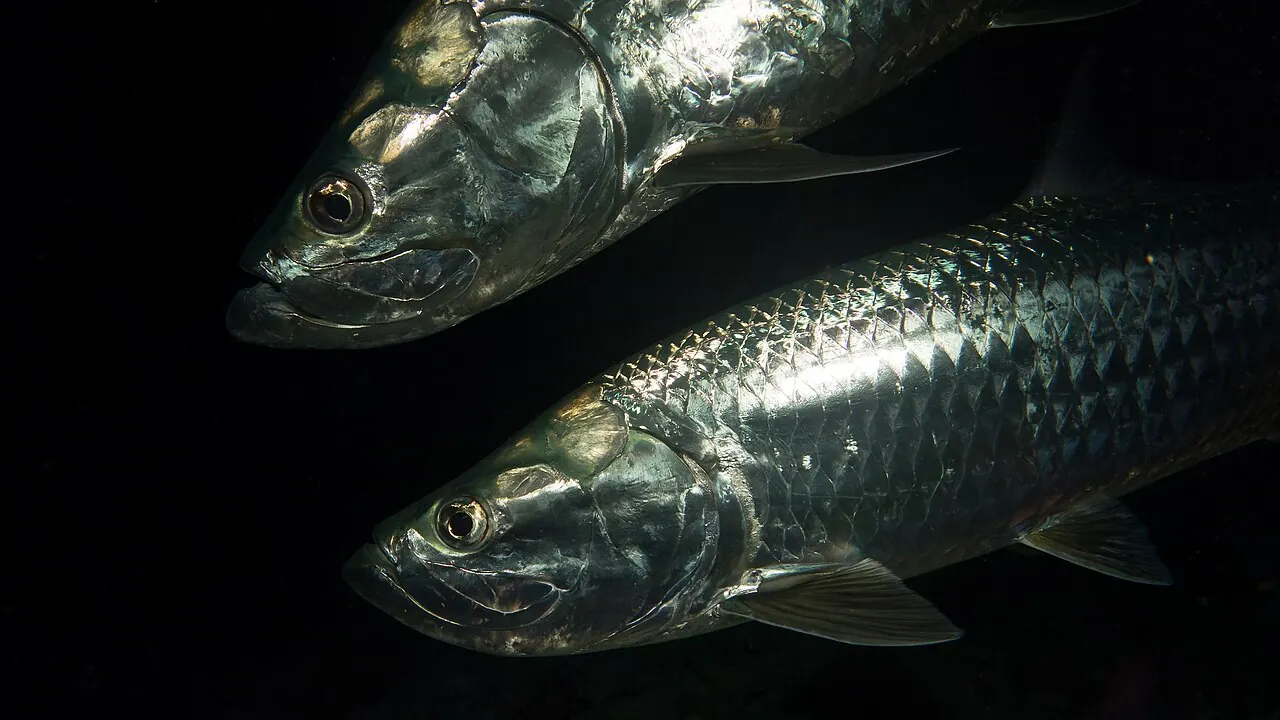
Atlantic Tarpon
Megalops atlanticus
A giant silver fish that must gulp air at the surface, starts life as a see-through larva and migrates across borders, tracked by 292 satellite tags.
Photo: Kris Mikael Krister / CC BY 3.0
3 things to know
- Tarpon are obligate air breathers: they gulp air into a swim bladder linked to the throat.
- A 203 cm (6.7 ft) female was estimated to carry more than 12 million eggs.
- In Florida, tarpon are catch-and-release only, and fish over 40 inches must stay in the water.
- Scientific name
- Megalops atlanticus
- Depth
- 0 m – 40 m
0 – 131 ft - Size
- Up to about 2.5 m (8 ft) long; commonly about 1.3 m (4.3 ft)
- Weight
- Up to about 161 kg (355 lb)
- Lifespan
- FishBase lists a maximum reported age of 55 years
- Diet
- Schooling fish such as sardines, anchovies and mullet, plus crabs
- Where
- Atlantic: Nova Scotia and Bermuda to Brazil, including the Gulf of Mexico and Caribbean; West Africa from Mauritania to Angola
- IUCN status
- Vulnerable
- Depth zones
- Sunlight
Every so often a tarpon has to rise and take a breath. Its swim bladder is joined to its gullet and can be filled straight from the air, which lets the fish live in oxygen-poor water. FishBase calls it an obligate air breather. The body is covered in big silver scales, which people use in ornamental work and to make artificial pearls, and a large tarpon can reach about 2.5 meters (8 feet) and 161 kilograms (355 pounds).
Tarpon live along Atlantic coasts from Nova Scotia and Bermuda to Brazil, through the Gulf of Mexico and the Caribbean, and off West Africa from Mauritania to Angola. One even crossed the Panama Canal and was caught off Coiba Island in the Pacific. They stay in shallow water (the IUCN puts the lower limit at about 40 meters, or 130 feet) and favor bays, estuaries, mangrove lagoons and river mouths, often running up into fresh water. Some populations may complete their whole life cycle in fresh water, including one in Florida's Deep Lake. Tarpon eat mostly schooling fish such as sardines, anchovies and mullet, and also take crabs.
A female 203 centimeters (6.7 feet) long was estimated to carry more than 12 million eggs, and FishBase lists a maximum reported age of 55 years. The young begin as see-through, ribbon-shaped leptocephalus larvae, the same kind of larva eels have, which move into estuaries to grow.
Satellite tags have shown where adults go. Between 2001 and 2018, Jiangang Luo, Jerald Ault and colleagues at the University of Miami's Rosenstiel School fixed 292 satellite tags to tarpon off three continents. Some mature fish made seasonal migrations of thousands of kilometers across state and national borders, following water near 26°C (79°F), while others stayed close to home. The tags pointed to likely spawning sites and showed that sharks kill more released tarpon than had been estimated, especially at passes, river mouths and inlets.
The IUCN lists the Atlantic tarpon as Vulnerable and declining. As of that study, no formal stock assessment of Atlantic tarpon had been done. In Florida, tarpon are catch-and-release only, apart from one tag per angler per year for a record attempt, and fish longer than 1 meter (40 inches) must stay in the water.
Sources
- fishbase.se/summary/Megalops-atlanticus.html
- iucnredlist.org/species/191823/174796143
- Study: doi:10.1111/faf.12430
- news.miami.edu/rosenstiel/stories/2020/01/new-study-reveals-international-movements-of-…
- myfwc.com/fishing/saltwater/recreational/tarpon
- floridamuseum.ufl.edu/discover-fish/species-profiles/bonefish
- commons.wikimedia.org/wiki/File:Atlantic_Tarpon_Megalops_Atlanticus_(251803267).jpeg



